Walking into a nail salon in 2026 feels less like a beauty appointment and more like a chemistry exam.
You sit in the chair, and the questions start: “Do you want gel? Dip? Acrylic? Hard gel? Builder?” You panic, say “whatever makes them look good,” and walk out with something you don’t fully understand—and often, something that wasn’t right for your lifestyle.
The truth is, there is no “best” product. There is only the best product for you.
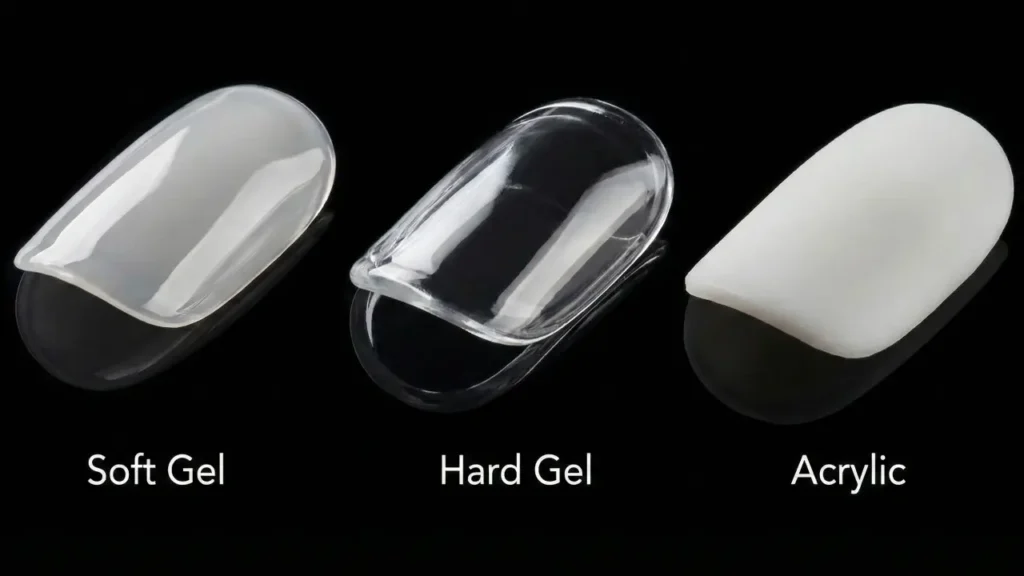
The battle of Soft Gel vs. Hard Gel vs. Acrylic comes down to three things: your natural nail health, your daily activity level, and how you plan to remove them. Choose the wrong one, and you might deal with lifting, snapping, or painful removal. Choose the right one, and you can grow natural nails longer than you ever thought possible.
In this definitive guide, we are breaking down the chemistry, the cost, and the pros and cons of the “Big Three” nail systems so you never have to panic at the salon menu again.
Contender 1: Soft Gel (The “Shellac” Style)
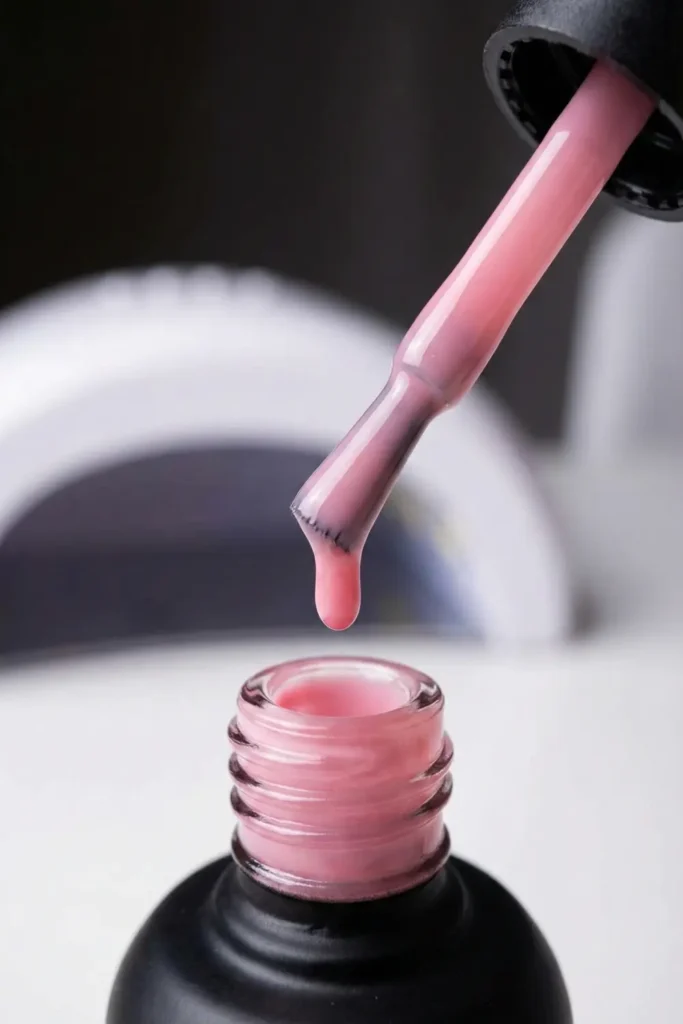
This is what most people mean when they say “Gel Manicure.” It is a porous polish that comes in a bottle with a brush, just like regular nail polish, but it cures under a UV/LED lamp.
The Chemistry: Soft gel is made of shorter molecular chains. This makes it flexible and, crucially, porous. Because it has microscopic pores, acetone can penetrate through it to break the bond. This is why it is often called “Soak-Off Gel.”
The Pros:
- Zero Drying Time: Once you cure, you can dig in your purse immediately.
- Natural Feel: It feels weightless, exactly like regular polish.
- Easy Removal: It can be soaked off in 15 minutes without heavy filing.
The Cons:
- No Structure: It adds zero strength. If your natural nail breaks, the soft gel breaks with it.
- Not for Extensions: You cannot build a fake nail tip with this. It is strictly an overlay.
Who This Is Best For: The client with naturally strong, short-to-medium nails who just wants a color that lasts 2 weeks without chipping.
Contender 2: Hard Gel (The “Indestructible” Armor)
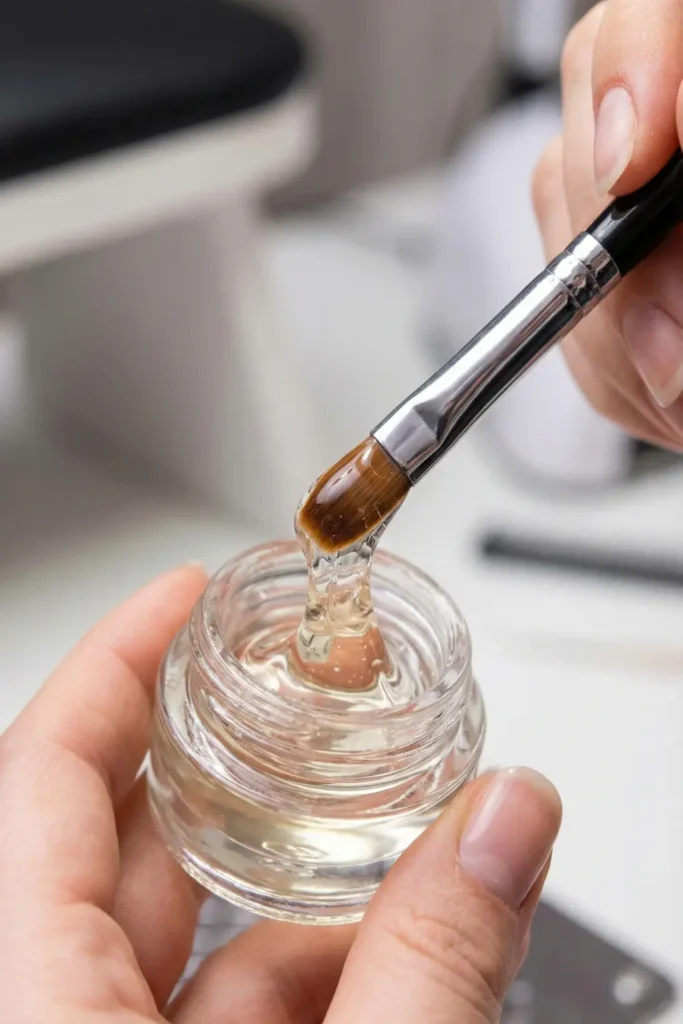
Hard Gel is the heavyweight champion of the gel world. It usually comes in a pot (not a bottle) and looks like a thick, gooey honey. It is applied with a separate brush.
The Chemistry: Hard Gel is tightly cross-linked. The molecules bond so closely together that the surface becomes completely non-porous. This means acetone cannot penetrate it. You could soak your hands in acetone for three days, and the hard gel would not budge.
The Pros:
- Glass-Like Finish: Because it is non-porous, it stays shinier than any other product. It doesn’t stain easily from hair dye or curry.
- Incredible Strength: It is harder than acrylic but more flexible, making it less likely to snap under pressure.
- Sculpting: You can build very long extensions with this.
The Cons:
- Removal is Scary: It must be filed off. If your tech doesn’t know what they are doing with an e-file, they can accidentally drill into your natural nail.
- Heat Spikes: When it cures in the lamp, it can generate a sharp burning sensation (exothermic reaction) for a few seconds.
Stylist Tip: If you have “oily” nail beds that reject everything else, try Hard Gel. Its tight bond makes it the most lifting-resistant product on the market.
Contender 3: Acrylic (The Old Reliable)
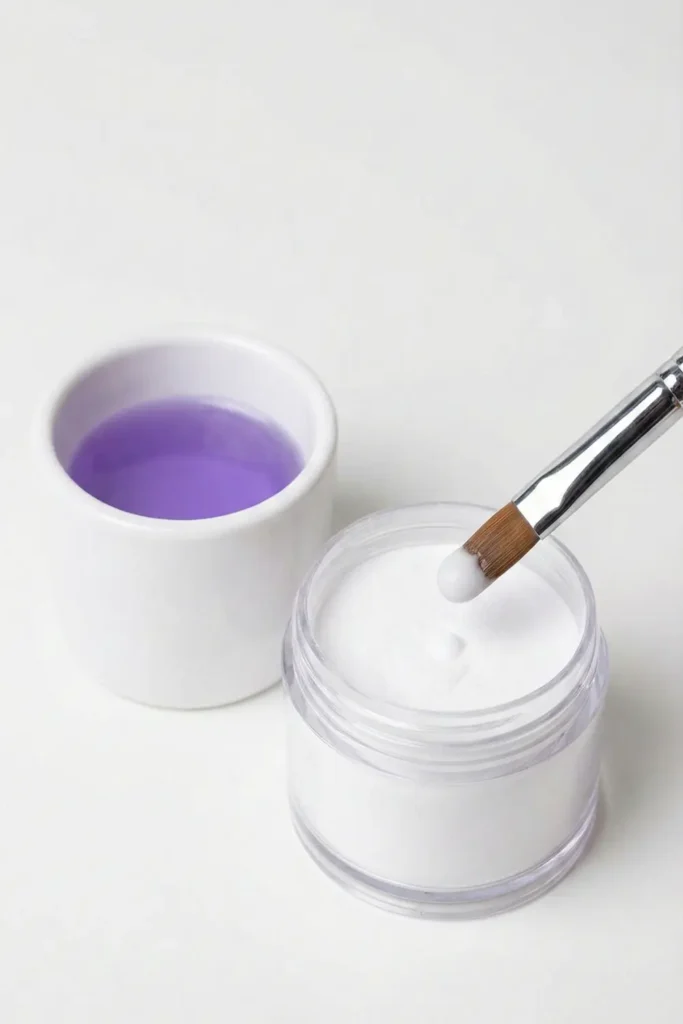
Acrylic is the grandmother of nail enhancements. It is not a pre-mixed liquid. It is a two-part system: a liquid (monomer) and a powder (polymer). The tech dips a brush into the liquid, then the powder, creating a bead of putty that hardens on its own (no lamp required).
The Chemistry: Acrylic hardens through a chemical reaction between the liquid and powder. It forms a very rigid, hard plastic structure. Unlike Soft Gel, it is not flexible. If you hit your nail against a wall, the acrylic won’t bend—it will either hold strong or snap the nail underneath.
The Pros:
- Durability: It is the hardest substance of the three. It can withstand heavy manual labor.
- Fixing Flaws: Because it is a putty, it can fill in ridges, fix bitten nails, and completely reshape a damaged nail bed better than gel.
- Cost: It is usually the cheapest option at the salon.
The Cons:
- The Smell: That strong “salon smell” is the monomer liquid. It can give some people headaches.
- The Damage Myth: Acrylic itself doesn’t damage nails, but bad technicians do. Because acrylic is so hard, lazy techs often over-file the natural nail to make it stick.
Why We Love It: For clients who want extreme shapes like Stilettos or Coffins, Acrylic holds those sharp edges better than gel, which tends to soften/round out over time.
The Comparison: Durability & Removal
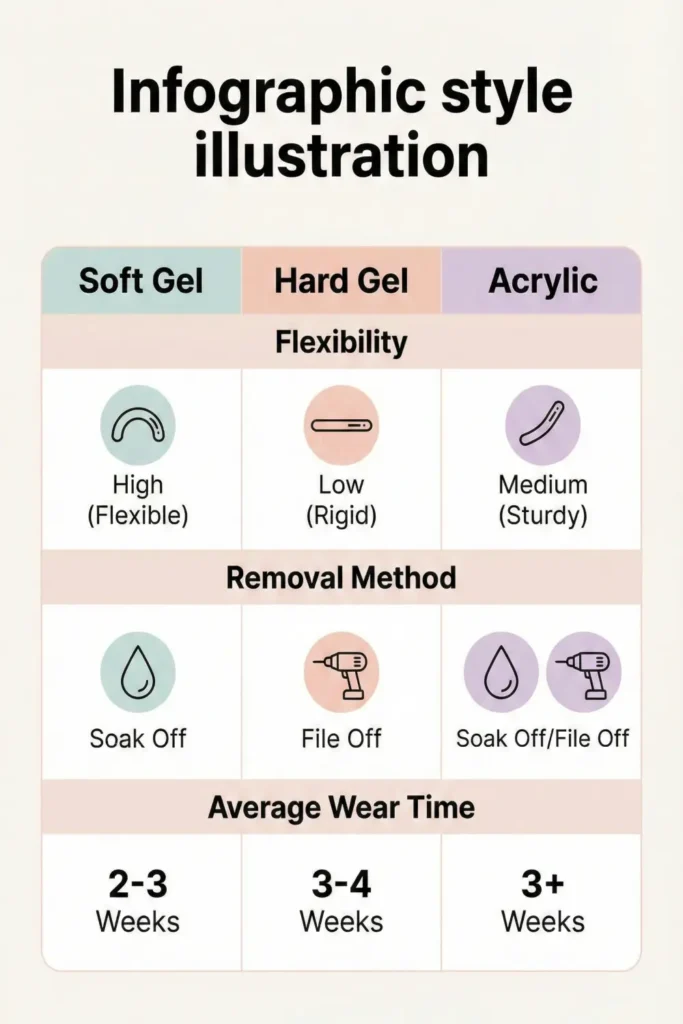
To make your decision easier, let’s look at the two factors that matter most: how long they last, and how you get them off.
1. Durability Test
- Soft Gel: 2 weeks. After that, it starts to peel at the edges.
- Hard Gel: 3-4 weeks. It rarely lifts. You usually only need to redo it because your natural growth is showing.
- Acrylic: 3-4 weeks. Extremely durable, but if it lifts, water can get trapped underneath (the “Greenie” fungus risk).
2. The Removal Reality
- Soft Gel: Soak-off safe. You can do this at home with foil and acetone.
- Hard Gel: Professional Removal Only. Do not try to remove this at home. You will file through your own nail. It is meant to be “filled” (infilled) rather than removed every time.
- Acrylic: Soak-off is possible, but it takes 30-40 minutes. Most salons will file 90% of it down and soak the last layer.
Which One Should YOU Choose?
Identify your “Nail Personality” below to find your match.
The “Low Maintenance” Girl
- You want: Nails that look natural and you want to take them off yourself at home if needed.
- Your Match: Soft Gel.
The “Nail Biter” / “Rehab” Case
- You want: To stop biting and change the shape of your stumpy nails instantly.
- Your Match: Acrylic. The hard texture makes it impossible to chew, and the putty can create a fake free edge where you have none.
The “Long Nail” Lover
- You want: Long, Kardashian-style extensions but you hate the smell of acrylic.
- Your Match: Hard Gel (or Gel-X). It feels lighter than acrylic but offers the same length capabilities.
Stylist Tip: If you are planning to change your nail shape dramatically (e.g., from square to almond), check out our The Ultimate Nail Shapes Guide to see which material holds which shape best.
A Note on “Dip Powder” (The Wildcard)
You might be asking, “Where does Dip Powder fit in?” Technically, Dip Powder is Acrylic. It is the same acrylic powder, but instead of using a smelly liquid monomer, it uses a resin glue (similar to Super Glue) to adhere the powder.
- Verdict: It is harder than soft gel but softer than traditional acrylic. It is a great middle ground for hygiene since no brushes are used, but it can feel bulky if applied too thick.
FAQ: The System Showdown
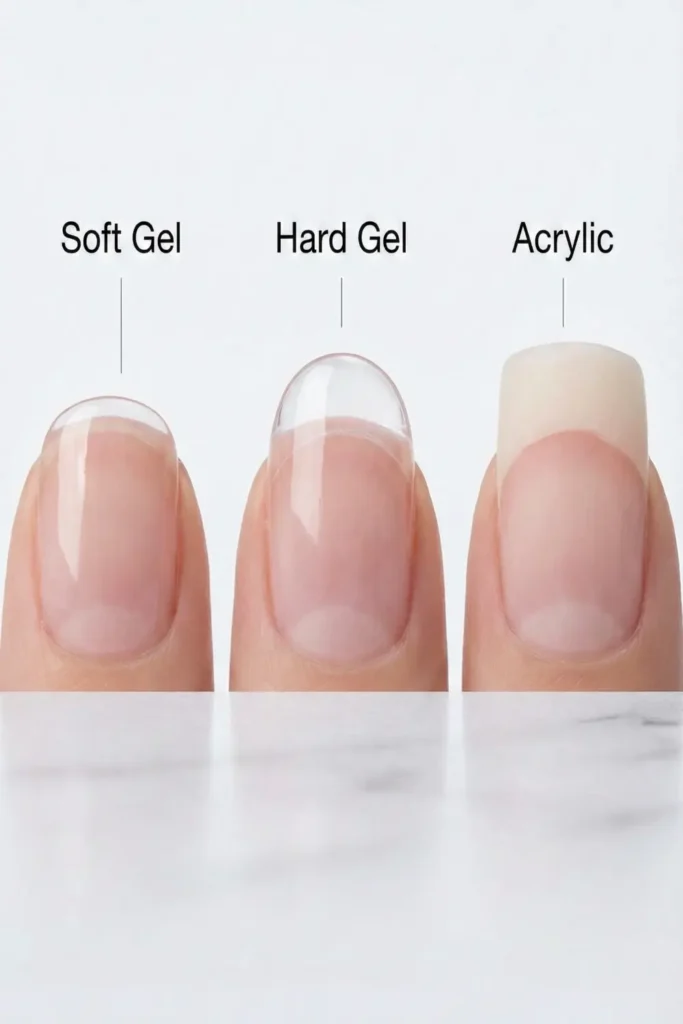
1. Which one causes the least damage? Soft Gel is theoretically the safest because it requires the least amount of filing to prep the nail and can be soaked off gently. However, any product can damage your nails if picked or peeled off.
2. Can I switch between systems? Yes, but you usually have to remove the old set completely. You cannot put Hard Gel on top of Acrylic, or Acrylic on top of Soft Gel—they flex differently and will separate, causing the nail to crack in the middle.
3. Is “Biab” Soft or Hard Gel? BIAB (Builder In A Bottle) is a hybrid. It applies like a Soft Gel (in a bottle) but has the strength of a Hard Gel. It can be soaked off, but it takes longer. It is currently the most popular option for growing out natural nails.
4. Why is my acrylic nail turning yellow? Low-quality acrylic powders can oxidize in the sun. Or, it could be a reaction to your tanning lotion or smoking. Hard Gel does not have this problem—it is chemically non-yellowing.
Conclusion
The “Soft Gel vs. Hard Gel vs. Acrylic” debate isn’t about one being superior; it’s about physics.
If you need flexibility (natural nails), go for Soft Gel. If you need armor (long extensions), go for Hard Gel. If you need reconstruction (bitten/damaged nails), go for Acrylic.
The next time you sit in that salon chair, don’t let the menu intimidate you. You now know the chemistry behind the service. Order with confidence.
For more medical insights on how artificial nails affect your nail bed health, read the advice from the Cleveland Clinic.