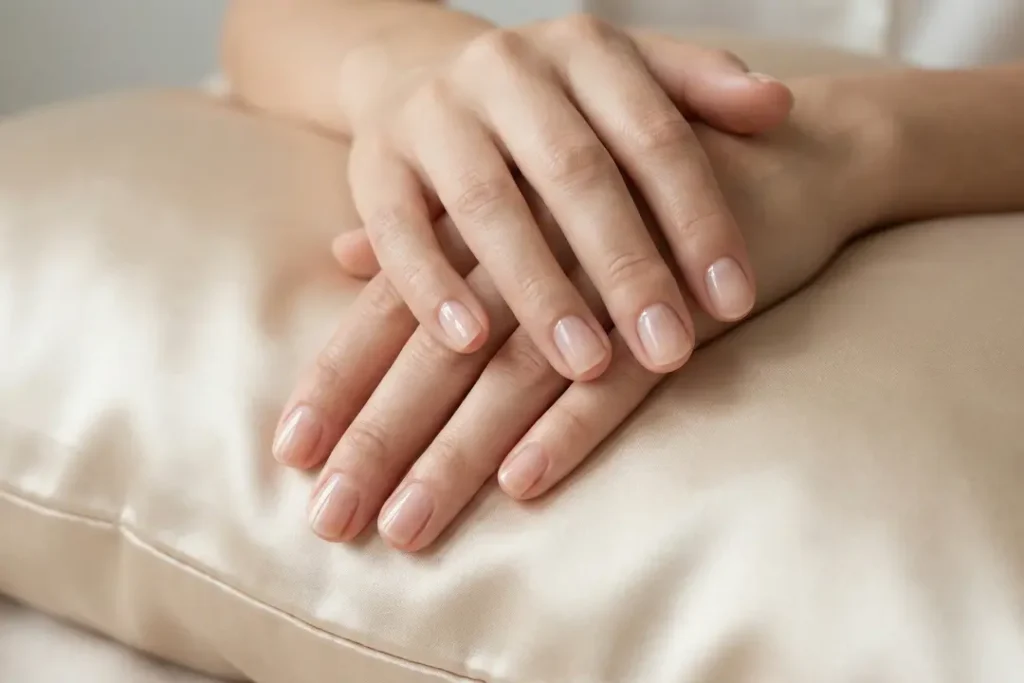
You can spend $100 on a luxury gel manicure. You can pick the trendiest “Tomato Red” or “Moody Moss” color. You can have the perfect almond shape. But if your cuticles are dry, ragged, or overgrown, the entire manicure will look cheap.
It is the harsh truth of the nail world: Cuticle care is the difference between a “DIY paint job” and a “Salon Masterpiece.”
For years, we have treated cuticles as an afterthought—something to be aggressively snipped away or ignored until they bleed. But as we move into 2026, with trends like the “Clean Girl Aesthetic” and “Soap Nails” taking center stage, the skin around the nail has become just as important as the nail itself.
In this ultimate guide, we are stripping back the myths. We will teach you the anatomical difference between “cuticle” and “proximal fold” (yes, there is a difference), why your nippers might be your enemy, and the exact nightly routine that will transform your fingertips from crusty to cashmere-soft.
Anatomy Class: What Are You Actually Cutting?
Before you pick up a tool, you need to understand the geography of your finger. Most people—and even some untrained technicians—make a critical mistake here.
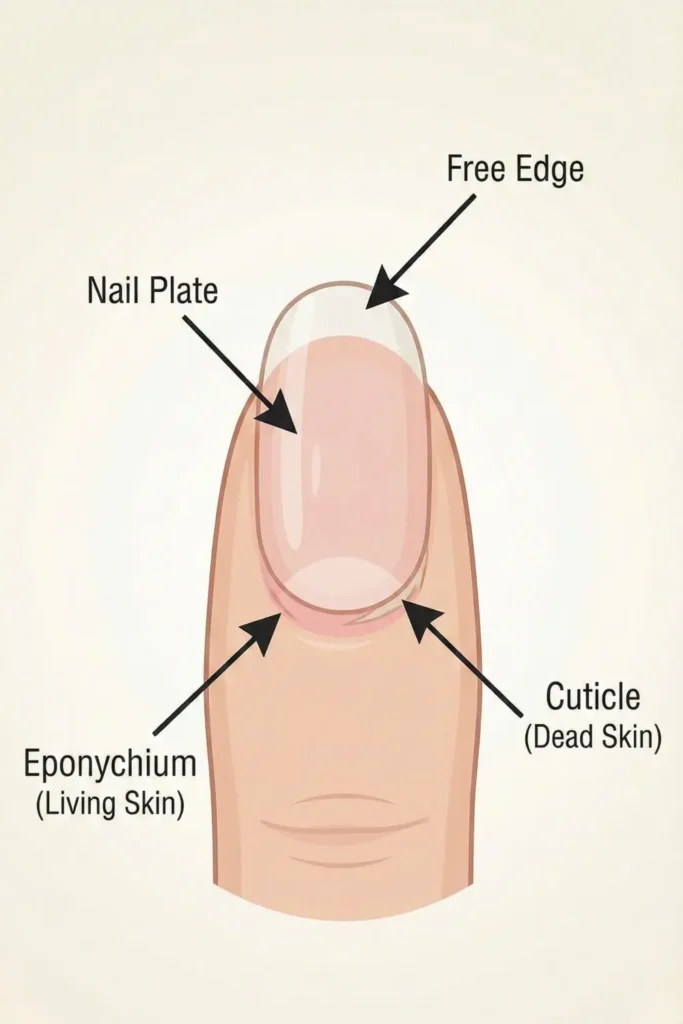
1. The Eponychium (Proximal Nail Fold) This is the band of living skin at the base of your nail. It creates a watertight seal to protect the matrix (the nail root) from bacteria.
- The Rule: NEVER cut this. If you cut the living seal, it grows back thicker and harder as a defense mechanism (callus). This is why people say, “Once you start cutting, you can’t stop.”
2. The True Cuticle This is the thin, white, flaky layer of dead skin that sheds from the eponychium and sticks to the actual nail plate. It looks like a thin film.
- The Rule: This is what needs to be removed. Because it is dead, it doesn’t bleed, and removing it allows your polish to adhere better.
Why We Love It: Understanding this distinction changes everything. You stop injuring yourself and start actually “grooming.”
The Tools: The “Safe” Kit
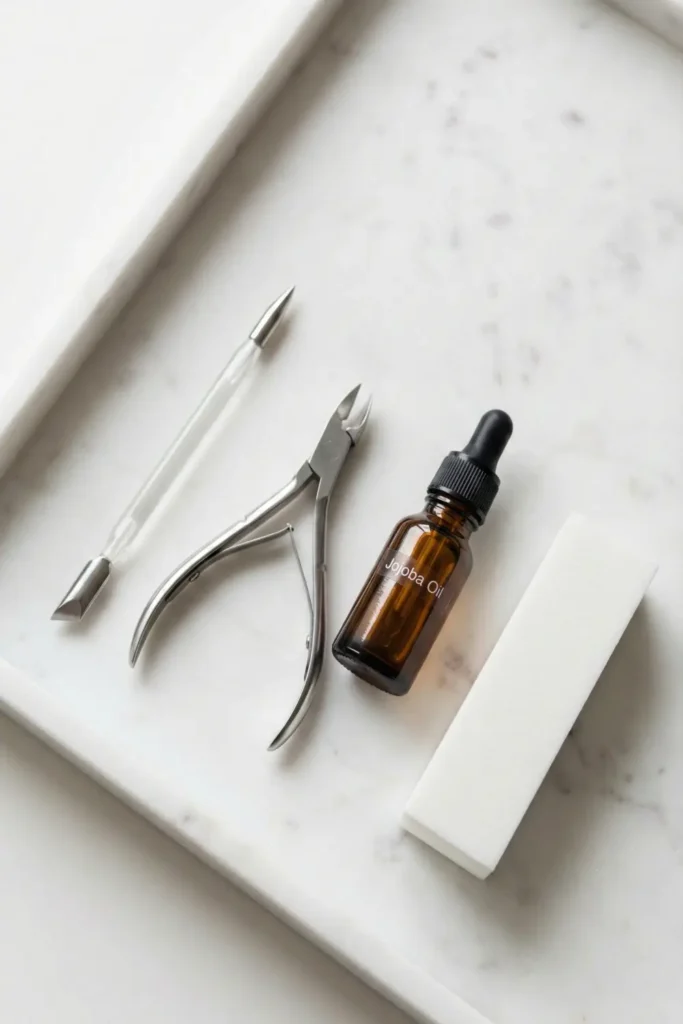
Throw away those cheap metal tools that came in a holiday cracker. To perform proper cuticle care, you need precision instruments.
- Glass Cuticle Pusher: Unlike metal (which scratches the nail) or wood (which dulls quickly), a glass pusher gently buffs away the dead skin while pushing back the fold. It acts as an exfoliator.
- High-Quality Nippers: You need nippers with a tiny jaw (3mm or 5mm). These are for snipping hangnails only—not for cutting the rim of skin.
- Jojoba Oil: We will discuss why Jojoba is King later, but make sure your oil is yellow, not clear.
- A Soft Buffer: To smooth the skin around the nail without cutting it.
Stylist Tip: Sanitize your tools with rubbing alcohol before every use. An infection in the nail matrix can permanently deform your nail growth.
The Step-by-Step “Dry Prep” Routine
The best way to tackle cuticles is actually dry. Water makes the skin spongy and difficult to trim precisely, leading to over-cutting. This is the method used for the famous The Russian Manicure Explained, adapted for safe home use.
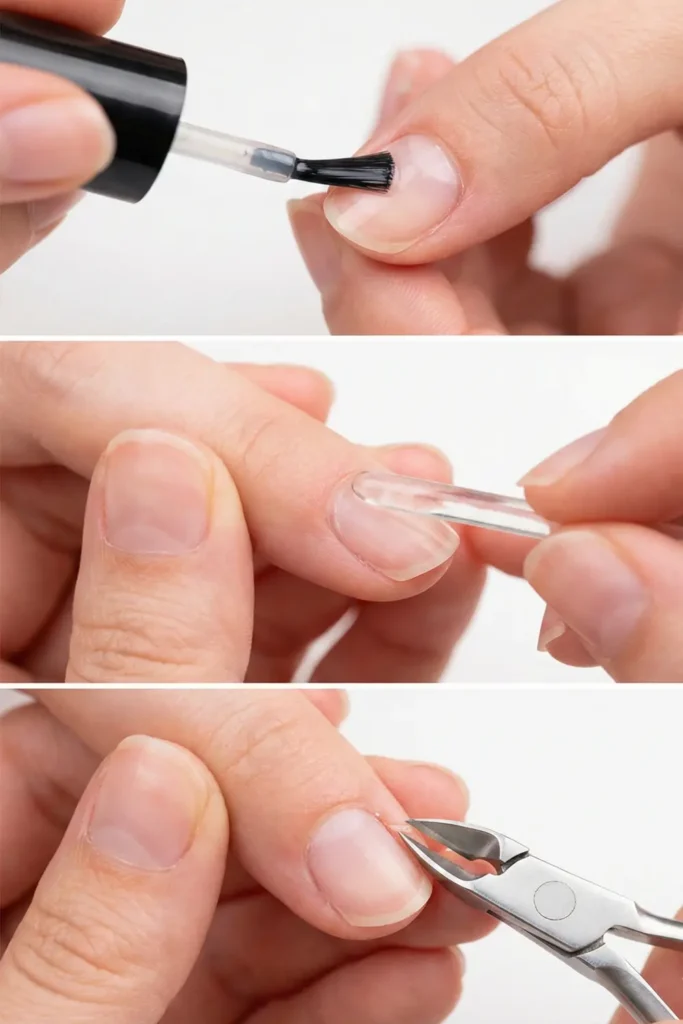
Step 1: Soften (Chemical, Not Water)
Instead of soaking in water, apply a “Cuticle Remover” liquid. These contain potassium hydroxide which chemically dissolves dead skin cells in 60 seconds.
- Why: It separates the dead cuticle from the living nail plate without scraping.
Step 2: The Push
Hold your pusher at a 45-degree angle. Gently slide it along the nail plate toward the base. You will see white “gunk” bunching up. That is the true cuticle.
- Technique: Do not dig down into the root. Push back and lift up.
Step 3: The Buff
Take your soft buffer or the glass pusher and gently rub the area you just pushed. This exfoliates the dead skin away. For 90% of people, this step removes the need for cutting entirely.
Step 4: The Snip (Only if Necessary)
Look for “tags” of skin that are sticking up white and dry. Use your nippers to snip only what is loose. If you pull and it hurts, stop immediately—that is living skin.
The Chemistry of Hydration: Oil vs. Cream
Why is “Cuticle Oil” the holy grail? Why can’t I just use hand lotion?
It comes down to molecular size.
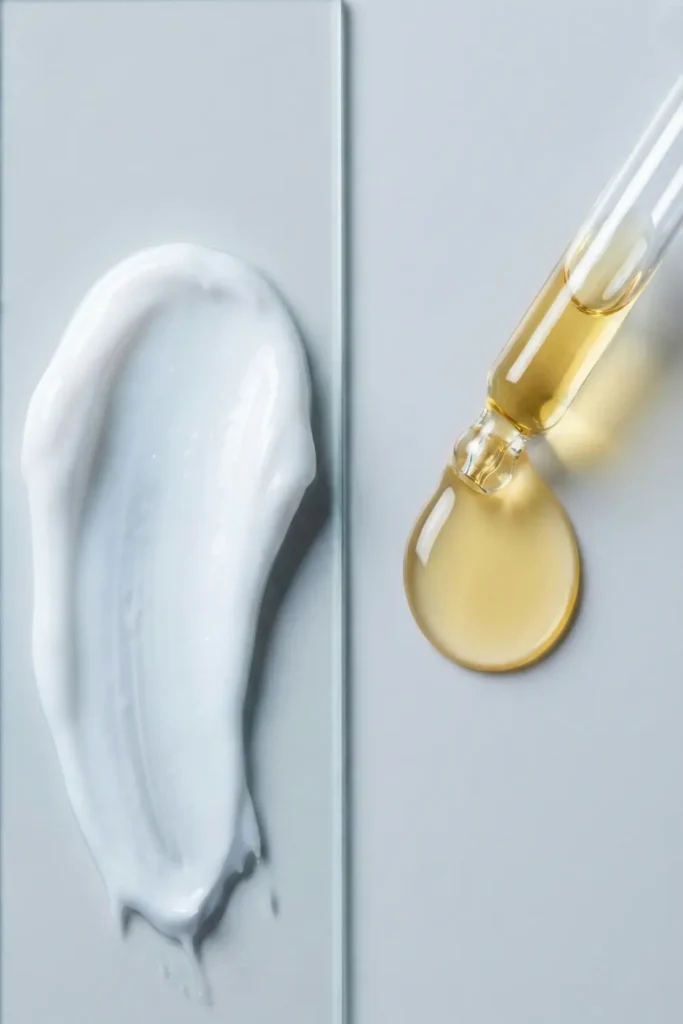
- Lotion/Cream: These are mostly water and occlusives (waxes). Their molecular structure is too large to penetrate the tight layers of the nail plate or the thick skin of the eponychium. They sit on top and wash off.
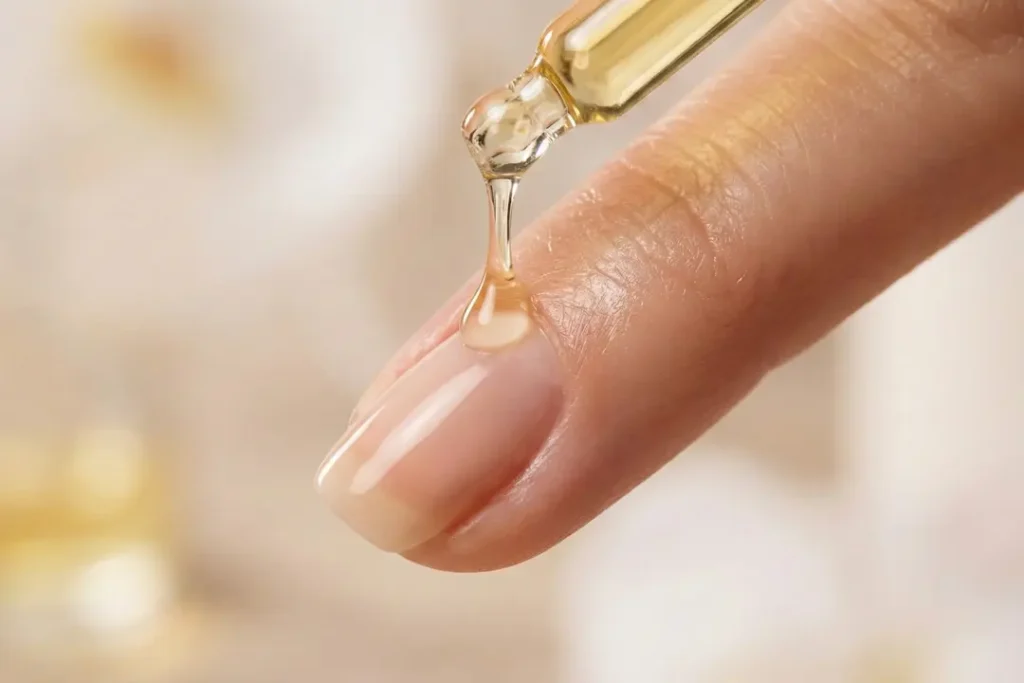
- Jojoba Oil: This is scientifically the closest match to human sebum (the oil your body produces naturally). Its molecules are tiny. It acts as a “carrier,” penetrating deep into the skin and nail plate to keep them flexible.
Why We Love It: A nail hydrated with Jojoba oil is flexible. When you bang it against a door, it bends. A dry nail snaps.
Stylist Tip: Buy “refill” bottles of pure Jojoba oil online and fill your own pens. It is 10x cheaper than buying branded cuticle oils.
The “Slugging” Method for Damaged Hands
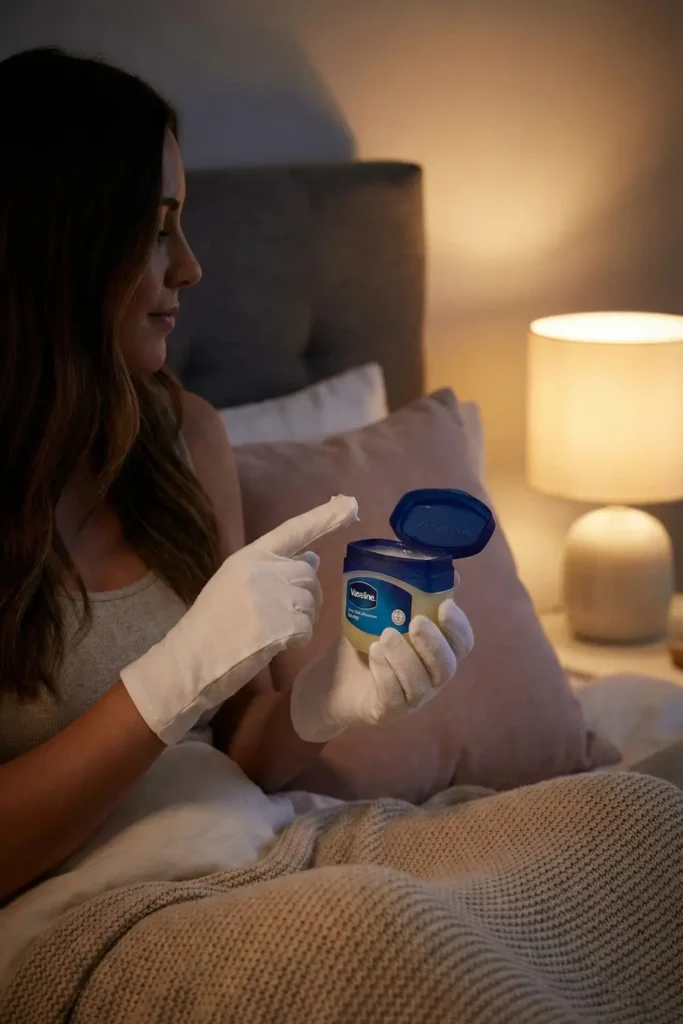
If your hands look like you have been gardening without gloves, you need an intervention. Enter “Slugging.”
This K-Beauty skincare trend works miracles for hands.
- Hydrate: Drench your cuticles in oil. Do not rub it in yet.
- Moisturize: Apply a thick layer of heavy hand cream over the oil.
- Seal: Apply a thin layer of petroleum jelly (Vaseline) or Aquaphor over the cuticles.
- Cover: Put on cotton gloves and go to sleep.
The petroleum jelly acts as an impermeable seal, forcing the oil and cream to absorb into the skin because they have nowhere else to go. You will wake up with new hands.
Common Cuticle Sins to Avoid
You might be ruining your cuticle care progress without knowing it.
- ** picking:** It is a nervous habit, but picking creates jagged edges that catch on clothes, leading to deeper tears.
- “Cleaning” with the File: Never use your nail file to “sand” the skin around your nail. Files are for the hard nail plate only. Using them on skin creates micro-cuts that turn into calluses.
- Dishwashing Naked: Hot water and dish soap are the enemies of oil. They strip moisture instantly. If you are cleaning, wear rubber gloves.
FAQ: Your Cuticle Questions Answered
1. How often should I push back my cuticles? Once a week is plenty. If you do it too often, you can cause inflammation. However, you should oil them every single day, multiple times a day.
2. My cuticles are growing halfway up my nail. What do I do? This is usually a sign that you haven’t been pushing them back regularly, so the skin has “dragged” forward with the nail growth. Start a weekly routine of gentle pushing with a softener. Over 4-6 weeks, the line will recede back to a normal position. Do not cut it all off at once!
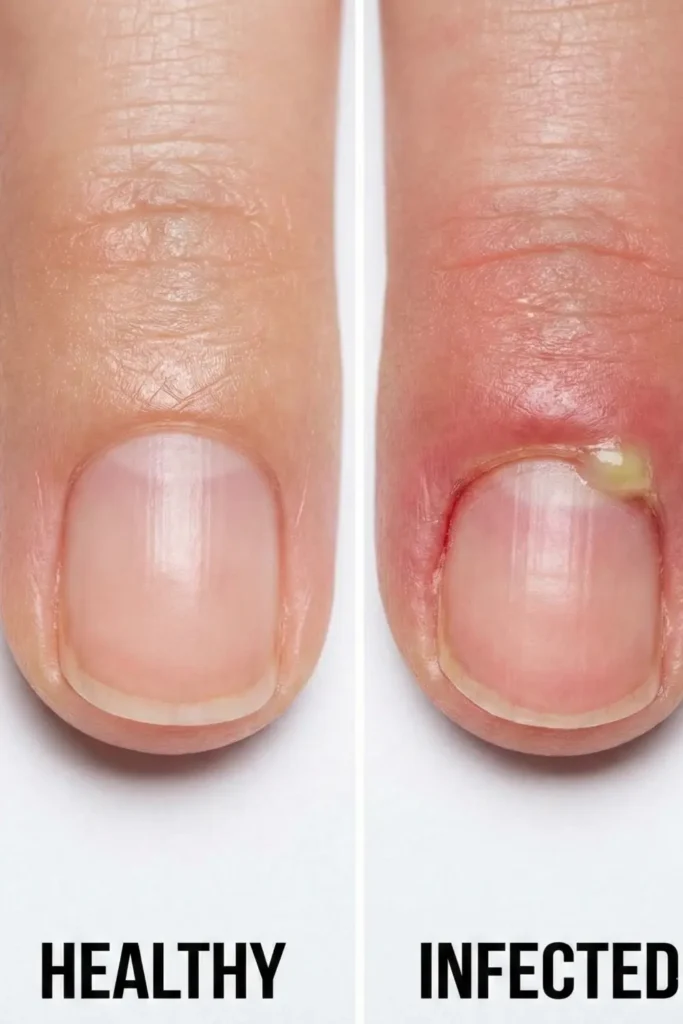
3. What if I accidentally cut myself? Stop immediately. Apply pressure to stop bleeding. Sanitize the area with alcohol. Do not apply nail polish or harsh chemicals to an open wound—it can lead to a paronychia infection.
Conclusion
Expensive nails are not about the brand of polish you use; they are about the canvas you paint on. You can make a $2 drugstore polish look like a high-end gel manicure if your cuticle care is flawless.
It requires consistency—a drop of oil after every hand wash, a gentle push once a week, and a refusal to snip living skin. But the reward is a manicure that lasts longer, looks cleaner, and feels healthier.
For more expert advice on maintaining the health of your hands and nails, check out the Mayo Clinic’s Guide to Fingernail Care.