
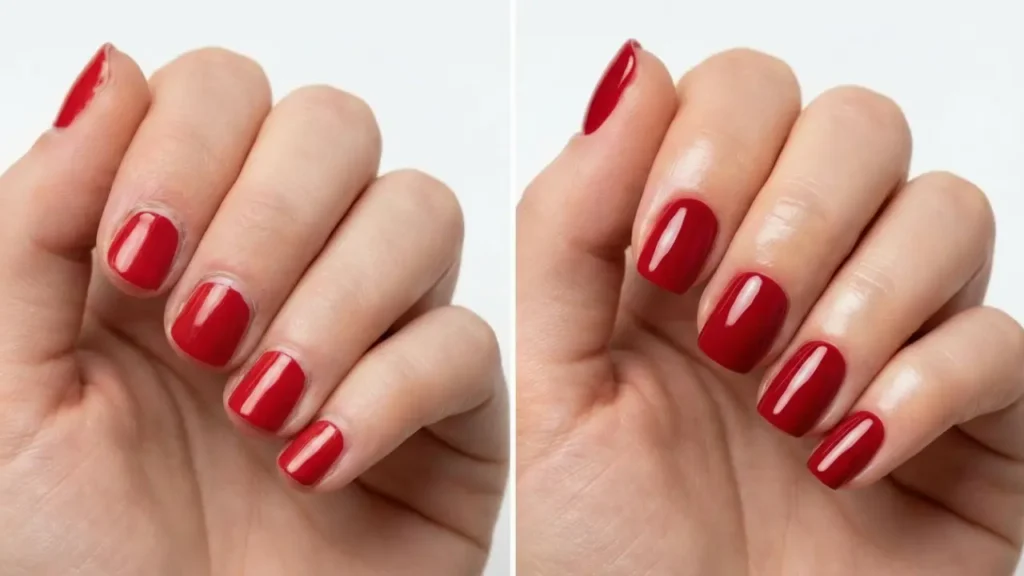
If you have spent any time on “NailTok” or browsed high-end beauty Instagrams in 2026, you have witnessed the phenomenon. It’s that impossibly perfect, “photoshopped” finish where the color seems to emerge directly from under the skin. There are no ragged edges, no visible gaps, and absolutely zero cuticle.
This isn’t magic. It is the Russian Manicure.
Originating in Eastern Europe, this method—often called the “Dry Manicure” or “E-File Manicure”—has become the gold standard for luxury nails. Clients love it because it can last up to 5 weeks without looking grown out. However, dermatologists and critics argue it is invasive and potentially dangerous.
So, is the risk worth the reward? In this honest guide, we are peeling back the layers of the industry’s most controversial trend to help you decide if it’s right for your hands.
What Exactly is a Russian Manicure?
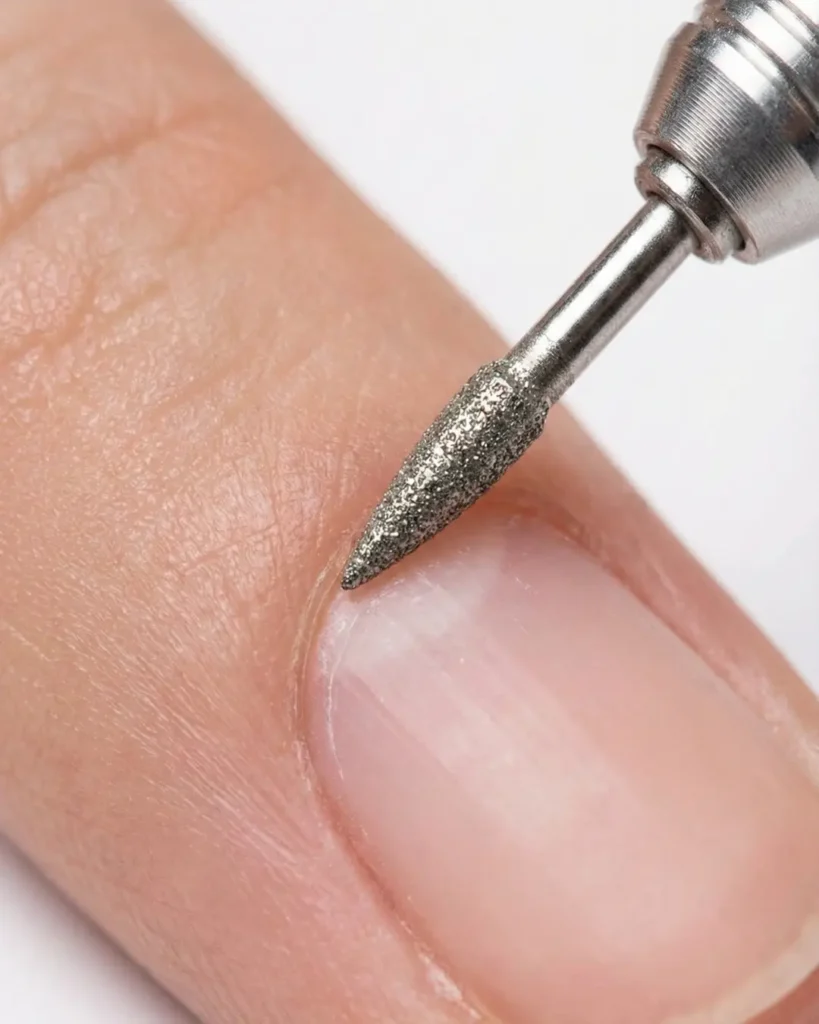
The Russian Manicure is defined by what it doesn’t use: water.
In a traditional Western manicure, your hands soak in a bowl of warm water to soften the skin before the technician pushes the cuticles back. The Russian method creates a completely dry canvas.
Technicians use an electronic file (e-file) equipped with microscopic diamond bits—similar to jewelry tools—to gently exfoliate the dead skin surrounding the nail plate. They lift the proximal nail fold (the skin at the base) to create a tiny “pocket,” trim the excess with surgical scissors, and apply polish deep inside that pocket.
The result is a manicure that sits flush against the living skin, giving you a seamless look that traditional methods simply cannot replicate.
Why We Love It:
Instant Length. By safely exfoliating the dead skin at the base, you reveal an extra 1-2 millimeters of nail plate. It creates an optical illusion that makes your nail beds look longer and cleaner instantly.
The Process: Precision Over Speed
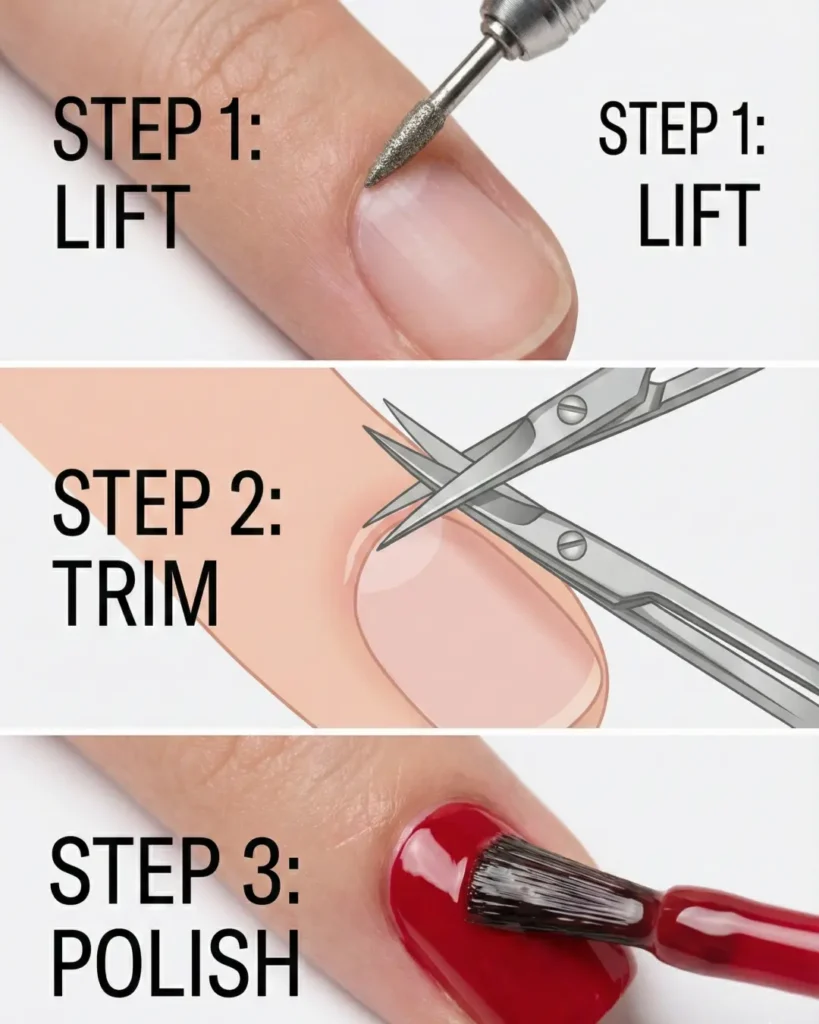
If you are used to being in and out of the salon in 45 minutes, prepare for a change. A proper Russian Manicure is a slow, surgical process that typically takes 1.5 to 2 hours.
- Dry Prep: The technician skips the soak. Water causes the nail plate to expand like a sponge; keeping it dry ensures the gel bonds tighter.
- The Lift: Using a fine-grit “flame” bit, the tech gently separates the cuticle from the nail plate, standing the skin up vertically.
- The Exfoliation: The e-file buffs away the hard, crusty skin on the side walls that nippers usually miss.
- The Cut: With ultra-sharp curved scissors, the tech removes the lifted strip of dead skin in one continuous motion.
- Deep Application: A base coat is painted deep under the cuticle fold, so when your skin relaxes back down, the color looks like it is growing out of your finger.
Stylist Tip:
Patience is key. Never rush a tech performing this service. High speed leads to mistakes. If your salon tries to do this in under an hour, they are cutting corners (and possibly your skin).
The Controversy: Is It Dangerous?
This is the big question. The American Academy of Dermatology has long advised against cutting cuticles, as they seal the nail matrix from bacteria.
The Russian Manicure is considered “invasive” because it removes this seal. The risks include:
- Infection: Without the cuticle barrier, bacteria can enter the nail root if tools aren’t sterile.
- “Ring of Fire”: An inexperienced tech can drill too deep, cutting a groove into your natural nail plate which causes pain and redness.
- Matrix Damage: Aggressive pressure at the base can damage the root, causing permanent ridges.
However, advocates argue that a correctly performed Russian Manicure is actually safer than nipping because the e-file seals the skin edges as it exfoliates, preventing the fraying that leads to hangnails.
Why We Love It:
Goodbye Hangnails. Traditional nippers often leave microscopic jagged edges that dry out and peel. The diamond bit polishes the skin perfectly smooth, meaning you won’t be picking at dry skin three days later.
Longevity: Russian vs. Regular Manicure
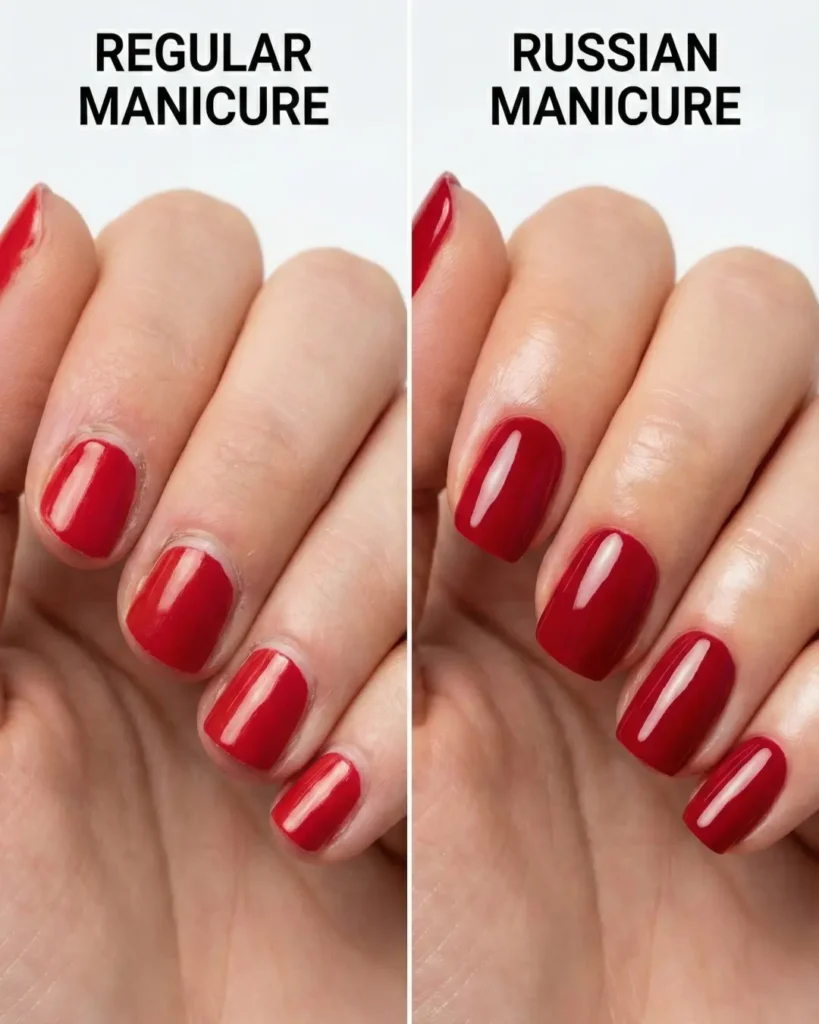
Why pay $80 or $100 for this? It comes down to math.
- Standard Manicure: The polish stops in front of the cuticle. As soon as your nail grows (even 1mm), a gap appears. Plus, water absorption during the soak can lead to premature chipping.
- Russian Manicure: The polish sits under the skin line. It takes about 10 days for your nail to grow past that point, meaning your manicure looks “fresh” for an extra week and a half.
If you are trying to grow your nails out using the methods in our BIAB vs. Gel-X Guide, the Russian technique is the perfect partner. It provides a clean, dry foundation that helps products like BIAB adhere for 4+ weeks.
Stylist Tip:
Don’t push it past 4 weeks. Even if the polish looks good, the structure of your nail changes as it grows out. Leaving product on too long can cause the nail to snap under the weight.
Who Should Get This Service?

The Russian Manicure isn’t just for aesthetics; it’s a problem-solver. You are the ideal candidate if:
- You have “Rough” Hands: If your cuticles grow thick, fast, and stick to your nail plate, the e-file is the only tool that can truly clean them up.
- You are a Nail Biter: The meticulous cleaning removes all the “catchy” edges that trigger biting.
- You are a Perfectionist: If seeing a gap in your polish after two days drives you crazy, this is the only service that will satisfy you.
Caution: If you have diabetes or are on blood thinners, the risk of micro-nicks makes this inadvisable. Consult your doctor first.
Why We Love It:
It forces relaxation. You cannot use your phone during this service. It is two hours of forced stillness, which can be a nice mental break.
How to Spot a Safe Salon (The Green Flags)
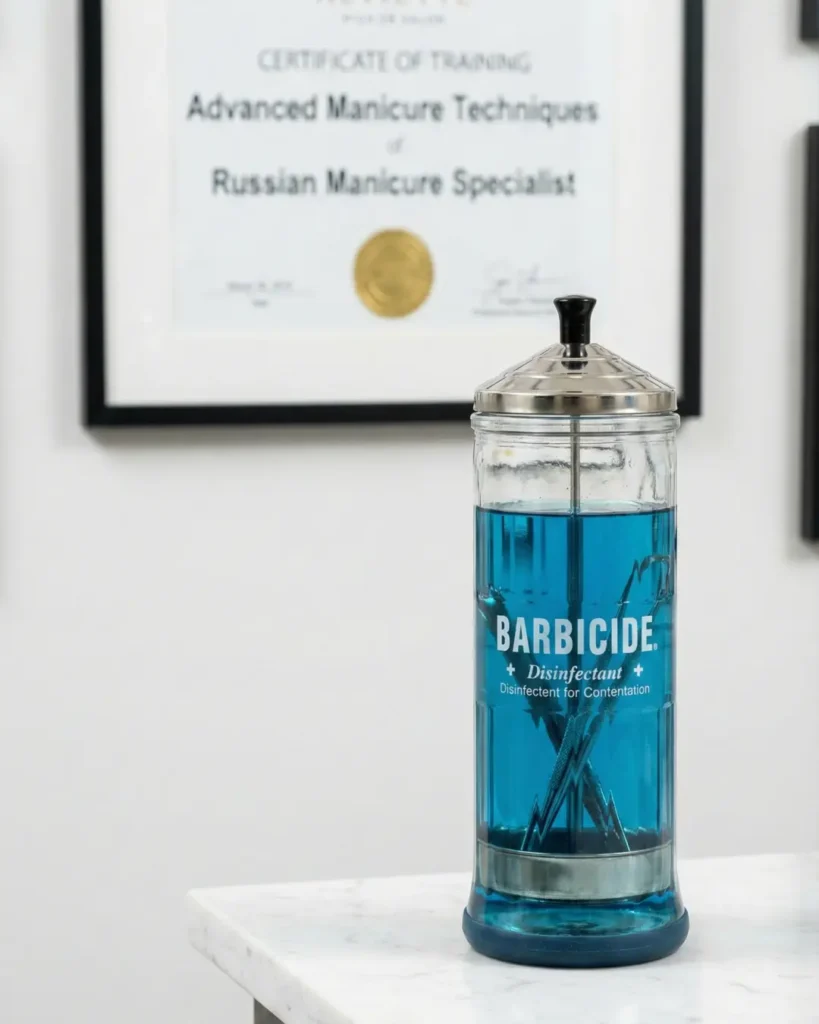
You cannot walk into a random discount salon and request this. It requires specialized, expensive training. Here is your safety checklist:
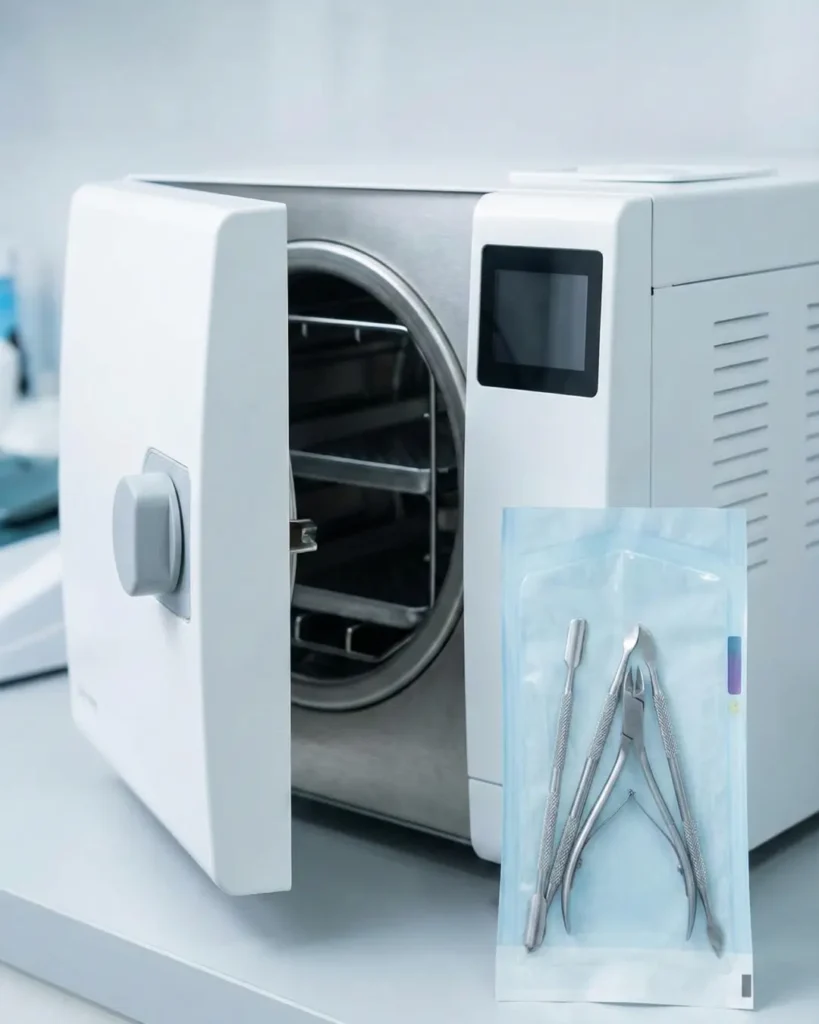
- The Tools: Are they coming out of a sealed, color-changing sterilization pouch? If they pull a drill bit out of a drawer, leave.
- The Bits: Are they using diamond bits? Sanding bands should never be used on the natural nail plate.
- The Certification: Ask, “Where did you learn the e-file technique?” Reputable techs are proud to tell you about their specific Russian or Ukrainian instructors.
- The Portfolio: Look at their macro photos. If the skin around the nail looks red, raw, or “angry,” they are over-filing.
Stylist Tip:
Check the pricing. If a salon offers a Russian Manicure for $40, be suspicious. This is a premium service that requires expensive equipment. Expect to pay premium rates ($70-$120).
2026 Trends: The “Clean Girl” Evolution
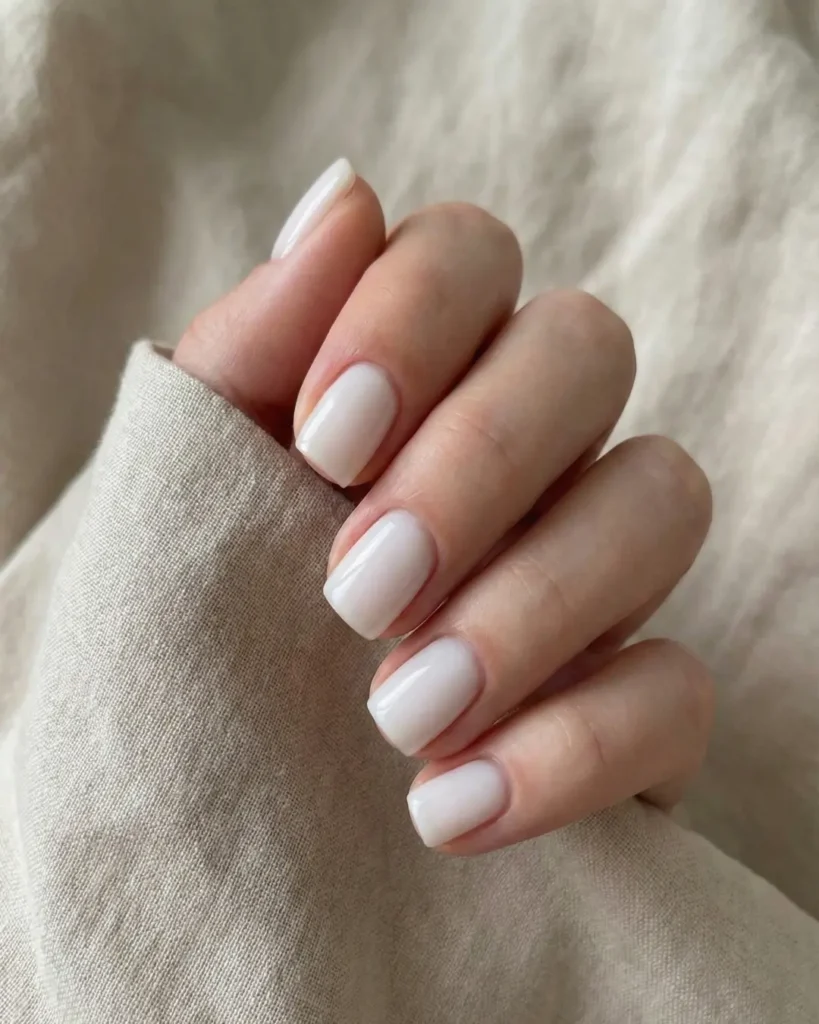
As we highlighted in our Pinterest Predicts 2026 report, the trend for Spring 2026 is moving toward “High Maintenance to be Low Maintenance.”
The Russian Manicure is the backbone of this aesthetic. It allows you to wear sheer “Soap Nails,” milky whites, or micro-French tips without them looking messy. The lack of cuticle makes even a clear coat look expensive and intentional.
Why We Love It:
The Editorial Look. You know those hand model photos where the fingers look impossibly smooth? That is invariably a Russian Manicure. It gives you magazine-cover hands every day.
Frequently Asked Questions
Does the process hurt?
No. A Russian Manicure should be 100% painless. You might feel a vibration, but you should never feel heat or stinging. If you do, tell your tech immediately—they are drilling too deep.
Can I do this at home?
Please do not. Taking a high-speed diamond drill to your own non-dominant hand is dangerous. You risk cutting your matrix and causing permanent deformity. Stick to soft buffing at home and leave the e-file to the pros.
How often should I go?
Because the exfoliation is so deep, you need to let the skin regenerate. We recommend waiting 3 to 4 weeks between appointments. Going too often can actually cause your skin to thicken as a defense mechanism.
Conclusion
The Russian Manicure is a technical revolution that offers a level of perfection traditional methods can’t touch. For those wanting that flawless, gap-free finish that lasts over a month, it is a game-changer.
However, it is an advanced service that demands respect. Do your homework, find a certified specialist, and prioritize safety. When done right, it’s the best manicure of your life. When done wrong, it’s a risk.
What to read next? Now that your cuticles are perfect, pick your next color from our Classy Winter Nail Trends guide.